The joy of networking
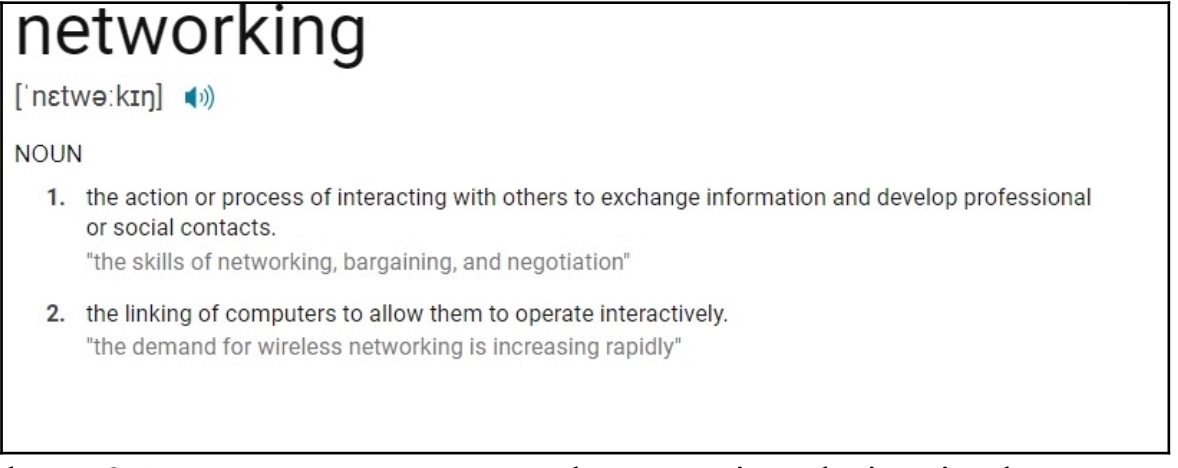
About 25 years ago a new word sprang into being in the business lexicon. There was nothing special about that, words come and go in management speak all the time. New words are usually just another way of dressing up a well-established business phenomenon or routine management practice.
But the word ‘networking’ had some useful provenance to reinforce its new term credentials. This is because it was related to computer-speak rather than jargon favoured to get the attention of senior management.
In the early 90’s computer networking for small to medium size businesses started making a major impact. Prior to this and due to the cost, computer networking only made sense for large corporations.
Small to medium companies could achieve the networking success of large corporations
By simply linking all the PCs together, small to medium companies could achieve the networking success of large corporations! This crystallized several aims in one go:
- Data management: business were able to pool all data in the server with access for all
- Security: employees could be tiered in terms of access to data via security protocols (passwords etc)
- Communication: everyone could communicate with each other, or with groups, via email
For the small businesses that pioneered networking this created immediate synergies, which increased productivity. Projects could be viewed in real time in all their aspects.
- Status
- Schedule
- Communications
- Finance
- Resources
- Time wasting exercises such as updating meetings etc were curtailed
- Mistakes and human error were reduced.
This idea that networking could create powerful synergies and increase productivity did not go unnoticed by business psychologists and anthropologists. Might similar synergies and gains be achieved by looking at people as PCs? In the same way that the IT specialist networkers had looked at PCs as people?
One of the obvious areas management specialists looked at was conferences and meetings. They weren’t interested in what happened inside the sessions and meetings, they focussed on what happened outside of them. Such as how the delegates with so much information to share interacted in the social spaces around the conference schedule.
The term coined to describe these interactions was networking. It wasn’t long before many conference organisers included physical spaces and time slots in conference programmes dedicated to networking.
Benefits of networking
The definition of networking is:
“the exchange of information or services among individuals, groups, or institutions specifically: the cultivation of productive relationships for employment or business”.
IVF/ART clinics are small to medium businesses. Networking can be a really valuable way to expand knowledge, learn from others success, and attract new patients.
Excellent forums for networking include industry meetings, conferences, symposia, training and education days, business luncheons, exhibitions, and trade fairs. Anywhere where those interested in ART gather, particularly where the audience profile is diverse and encompasses several or more disciplines. Even parties, social functions and entertainment events can function as useful forums for networking.
The main benefits of networking are the synergies and opportunities that are created in the networking forum. These include:
-
Generation of referrals/Increased business
This is a primary outcome of networking with patients and with people who can put you in contact with patients. Events that support this type of networking are patent focused and may even include people that represent groups of patients. This could be purchasers from payer organisations or even patients themselves.
A good example is exhibitions and health fairs, and the types of programmes that run alongside them. For instance, many health exhibitions run educational/trade symposia sessions alongside the exhibition. These informal symposia often provide excellent networking opportunities.
Looking at exhibitions, it is advisable to set aside part of your exhibition stand with a dedicated networking area. Perhaps with some comfortable seating and some social amenities such as the provision of coffee or light refreshments. You don’t have to be particularly ambitious. Sometimes even a water cooler on the stand provides a good excuse for networking opportunities.
-
Opportunities
Networking provides an abundance of opportunities. Opportunities can include ventures, patient leads, referrals, partnerships, speaking and writing opportunities, publicity and marketing ventures.
And don’t forget recruitment. Networking is a great way to meet potential new team members.
-
Connections
Remember the adage, “It’s not what you know, it’s WHO you know”?
Networking at events is a great way to meet influential people that you might not otherwise meet. A good example is congresses where it is possible to informally meet speakers and faculty outside of conference sessions.
Networking is a great way to tap into advice and expertise that you wouldn’t normally have access to.
-
Raising your profile
Being visible and getting noticed is a big benefit of networking, so it is important to regularly attend business and social events. One way to raise your profile is by building a reputation as knowledgeable, reliable and supportive. This offers person useful information to other people who need it
How do you network?
Networking is like any other business activity in that planning is very important. Think like Lady Cora planning the social year for Downton Abbey!
First, decide where and when. It is helpful to make a list of events and likely places were networking will take place. This can be anything from a local business seminar to an international exhibition.
Second, set generic targets. Of course, you may even have specific networking targets. It maybe targetting important person, but part of the power of networking is the ability to make connections that you might not otherwise make. This is where generic targets come in. A generic target for a networking event might be:
– Contact details/digital business cards of three useful people I meet
– Seek the advice of two people at this event on a select topic I have in mind
– Hand out a business card or exchange digital business cards, with every person I spend more than five minutes talking to
– Invite three people from this event to my exhibition stand tomorrow
– Speak to and learn the names and faces of five people I meet tonight in order to say hello and greet them when I see them in the conference.
Thirdly, keep some record of your networking encounters. This doesn’t have to be as rigorous as sales contact data, but DO keep salient notes in appropriate electronic format. This is best written up post-event in private when names, faces and conversations are still fresh in mind. Don’t write them up in situ in real time or you will unnerve your new contacts and friends!
On a final note, it is worth reiterating that the mechanics of networking utilises social skills. But not all of us, and you can include me in this demographic are all singing and dancing extroverts. Yet introverts and quiet types can also make very good networkers. In Part two, I’ll have some tips and hints for both extroverts and introverts on how to make networking encounters productive.
Neil Madden, Editor
The Fertility Hub